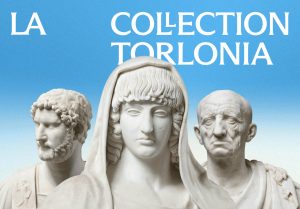
The conference presents research on polychromy in ancient sculpture, which has profoundly changed the way we view these works. Although the reconstructions remain partly hypothetical, they help us to better understand the role and function of art in ancient societies.
The conference in English, organized alongside the exhibition The Collection Torlonia. Masterpeces of Roman Sculpture, will be held Wednesday April 8th 2026, at 6pm, at the Maxwell-Cummings Auditorium, 1379-A, rue Sherbrooke West. RSVP
The study of color is interdisciplinary: it combines the analysis of pigment traces on sculptures (conducted by archaeologists and restoration chemists), the reinterpretation of literary sources through philology and linguistics, and the contribution of cognitive sciences to understand the evolution of color terminology in ancient languages. Technical treatises from late antiquity and semiotic analysis also help to interpret the social codes associated with colors. The conference will present examples of works from archaic Greece to the early Byzantine period.
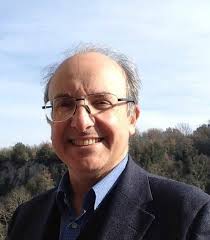
Paolo Liverani is professor of ancient topography at the University of Florence. Former curator of Greek and Roman antiquities at the Vatican Museums (1986–2005), he is a specialist in the topography of ancient Rome, polychromy in sculpture, museum history, and late antiquity. He is the author of over 350 publications.